Revivalism (architecture)
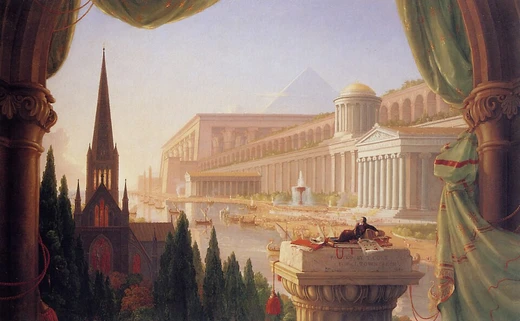
Revivalism revived disused historical architectural styles.

Eagledj · CC0
Revivalism in architecture refers to the period and movement within Western architectural history, roughly from the mid-18th century to the early 20th century, during which architects adopted a succession of antecedent and reminiscent styles that had fallen into disuse or abeyance. It is related to historicism and was itself succeeded by Modernism. Notable revival styles include Neoclassical architecture and Gothic Revival.
- field
- Architecture
- known_for
- Revival of historical architectural styles
- period
- Mid-18th century to early 20th century
- region
- Western architecture
Lore & Background
The idea that architecture might represent the glory of kingdoms can be traced to the dawn of civilization, but the notion that architecture can bear the stamp of national character is a modern idea that appeared in the 18th century and was given political currency after the French Revolution. As the map of Europe repeatedly changed, architecture was used to grant the aura of a glorious past to even the most recent nations. Two new, often contradictory attitudes emerged in the early 19th century: pluralism promoted the simultaneous use of an expanded range of styles, while Revivalism held that a single historical model was appropriate for modern architecture. Associations between styles and building types appeared, such as Egyptian for prisons, Gothic for churches, and Renaissance Revival for banks and exchanges, based on perceived connections like the pharaohs with death and eternity, the Middle Ages with Christianity, or the Medici family with banking and commerce.
Reader's Guide
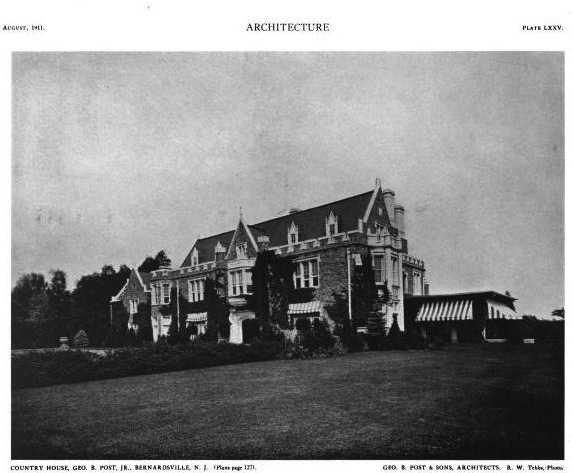
Revivalism's significance lies in its role as a dominant architectural movement in the 19th century, including Victorian architecture, and its use of historical styles to express national identity and character. All Revivalists shared the strategy of advocating a particular style based on national history, a major enterprise of historians from the mid-18th to early 19th centuries. Only one historic period was claimed to be capable of providing models grounded in national traditions, institutions, or values, making issues of style matters of state. The most well-known Revivalist style is the Gothic Revival, which appeared in mid-18th-century England in the houses of wealthy antiquarians, such as Strawberry Hill House. German Romantic writers and architects were the first to promote Gothic as a powerful expression of national character and a symbol of national identity in divided territories. Modern-day revival styles are frequently placed under the heading of New Classical architecture.
Did You Know?
- Revivalism was succeeded by Modernism around the late 19th and early 20th centuries.
- The Gothic Revival style appeared in the mid-18th century in England, with Strawberry Hill House as a notable example.
- German Romantic writers and architects first promoted Gothic as a symbol of national identity.
- Associations between styles and building types included Egyptian for prisons and Gothic for churches.
Defining and Classifying Architectural Styles
An architectural style functions as a systematic way to group buildings and structures according to roughly eighty-four distinguishing features. These range from the broad silhouette and overall appearance to more granular details such as how components are arranged, what materials are employed, the construction technique, the scale, the structural logic, and even the regional character that a structure carries. Styles are typically anchored to a particular historical period, a specific geographic tradition, or a reaction to an earlier manner, and they are shaped by the wider artistic currents and what might be called the general human condition of their era. Heinrich Wölfflin drew a striking parallel between a building and a costume, suggesting that the built form mirrors the attitudes and movements of the people who inhabit that moment in time. In the twenty-first century, a vast array of approaches is often bundled under the umbrella of contemporary architecture, united less by a shared aesthetic than by an extreme dependence on computer-aided design tools associated with parametricism. Notably, folk or vernacular construction—small-scale building guided by local custom without a named designer—does not qualify as a style in this formal sense.
The Enlightenment Revolution in Thinking About Style
Before the eighteenth century, the very idea of an architectural style was essentially foreign to the people who designed buildings. For centuries, architectural form was regarded as something timeless—either a revelation handed down from the divine or an absolute truth rooted in the laws of nature. A master builder was simply one who had grasped this universal language. The Enlightenment shattered that assumption. Thinkers began to see each historical era as a distinct stage in humanity's growth, an idea echoed in Johann Gottfried Herder's concept of Volksgeist, which would later evolve into the broader notion of Zeitgeist. This reframing made it possible to treat the architecture of every age as an equally valid expression, and the word style, used in this classificatory sense, became firmly established by the mid-eighteenth century. In the study of architectural history, style now serves as what one scholar called a protection against chaos, linking otherwise unrelated structures into a coherent narrative. It is one of several organizing approaches, alongside biography, geography and culture, type, technique, and theme and analogy, that scholars use to make sense of the built record.
How Styles Travel, Mutate, and Return
Architectural styles do not appear in isolation; they grow out of the accumulated history of a society, and at any given moment several may be in fashion simultaneously. Transitions are rarely abrupt—architects gradually absorb new ideas and adapt their practice. Sometimes a new movement is defined primarily as a rebellion against what came before, as postmodern architecture was literally named to mean after modernism, and by the twenty-first century it had fractured into multiple sub-styles with their own labels. Styles also travel. Renaissance ideas took root in Italy around 1425 and then diffused across Europe over the following two centuries, producing recognisably related yet distinct French, German, English, and Spanish variations. Colonialism carried styles to new continents as well: Spanish priests brought their building traditions to California in the late eighteenth century, creating the distinctive mission architecture. Perhaps most fascinating is the return of styles. Classicism has been resurrected repeatedly, each time emerging as something new—neoclassicism being one such iteration. The Spanish mission style reappeared a century later as Mission Revival, which in turn evolved into the Spanish Colonial Revival, demonstrating that a style can be reborn yet never quite repeat itself.
The Ongoing Debate and Style as Historical Tool
Since at least the nineteenth century, the usefulness of style as a framework for understanding architecture has been contested. Many practicing architects maintain that the concept is obsolete, steeped in historicism, and reductive because it fixates on visible appearance while ignoring the intellectual ideas embedded in a form. Those who reject style-based analysis tend to organize the field around a canon of celebrated architects and landmark buildings, leaving lesser structures outside serious attention. Yet the traditional chronological approach through styles remains the most popular way to narrate architectural history, tracking shifts in materials, economics, fashion, and belief. This persistence is partly practical: buildings are rarely preserved for aesthetic reasons alone. They are re-purposed, their original intent fades, and sometimes even the architect's identity is lost. In such circumstances, the style classification becomes an indispensable historical tool, a reliable thread connecting a structure to its time. The scholarly tradition behind this approach stretches from Vitruvius in the first century B.C. through Giorgio Vasari's sixteenth-century biographies, and into the formalist schemes of the nineteenth and twentieth centuries, where scholars like Alois Riegl, Heinrich Wölfflin, and Paul Frankl pursued what Wölfflin called art history without names—studying forms independent of their authors.
Gallery





Frequently Asked Questions
What is Revivalism (architecture)?
Revivalism is a broad movement in Western building design in which architects deliberately resurrected older stylistic vocabularies that had fallen out of everyday use. Rather than forging something wholly new, practitioners reinterpreted classical, Gothic, or other historical forms for contemporary structures.
When did Revivalism (architecture) take place?
The movement spans roughly from the mid-1700s through the early 1900s, making it one of the longest-running stylistic currents in Western design history. It gradually yielded to Modernism as the dominant philosophy in the early twentieth century.
What are the most well-known revival styles under Revivalism (architecture)?
Two of the most prominent branches are Neoclassical architecture, which drew on Greco-Roman forms, and Gothic Revival, which reimagined medieval pointed-arch and ribbed-vault aesthetics. Other regional variations also revived Renaissance, Baroque, and Romanesque elements.
How does Revivalism (architecture) connect to Modernism?
Revivalism is often seen as the direct predecessor to Modernism; the very desire to break free from historical imitation that drove early Modernist architects was a reaction against the revivalist habit. In that sense, Modernism effectively closed the Revivalism era by rejecting the premise that new buildings needed to echo old ones.
Why is Revivalism (architecture) considered important?
It demonstrated that architectural identity could be consciously shaped by referencing the past, giving communities a visual language tied to cultural memory. The movement also laid the groundwork for later debates about authenticity, eclecticism, and the tension between tradition and innovation that still shape design discourse today.
More in Architectural Styles And Elements 1-18
Spotted an error? Know more?
This is a living reference — every entry is fact-audited, and reader corrections feed straight into our audit queue. Suggest an edit · See this site's audit record