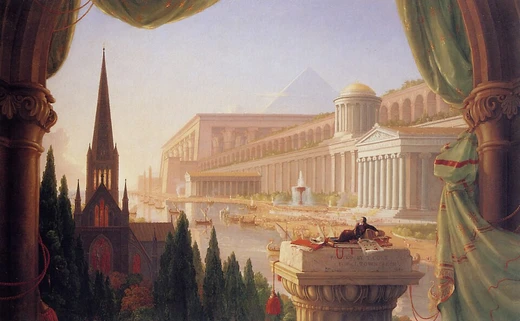
Steeple
A tall tower topped by a spire, common on Christian churches.

A steeple is a tall tower on a building, topped by a spire and often incorporating a belfry and other components. Steeples are very common on Christian churches and cathedrals, and the use of the term generally connotes a religious structure. They may be stand-alone structures or incorporated into the entrance or center of the building. In Christianity, steeples serve as a clear marker of a Christian church and are an elaborate architectural metaphor—a symbol pointing to heaven, directing the minds of the faithful upward to God.
- field
- Architecture
- known_for
- Tall tower on Christian churches, topped by a spire, often with a belfry
- common_use
- Christian churches and cathedrals
- vulnerabilities
- Earthquakes, lightning, strong winds, hurricanes
Lore & Background
Towers are a common element of religious architecture worldwide and are generally viewed as attempts to reach skyward toward heavens and the divine. At first they were fairly modest and entirely separate structures from churches. Over time, they were incorporated into the church building and capped with ever-more-elaborate roofs until the steeple resulted.
Reader's Guide
Steeples are significant as a defining architectural feature of Christian churches and cathedrals, serving both a practical and symbolic role. They incorporate a belfry and are topped by a spire, acting as a clear marker of a religious structure. Symbolically, steeples are described as an elaborate architectural metaphor pointing to heaven, directing the faithful upward to God. Despite these vulnerabilities, steeples remain a widespread and enduring element of Christian architecture.
Did You Know?
- Steeples are very common on Christian churches and cathedrals, and the term generally connotes a religious structure.
- Over half of unusually slender steeples in Romanian churches have been lost to earthquakes.
More in Architectural Styles And Elements 1-18
Spotted an error? Know more?
This is a living reference — every entry is fact-audited, and reader corrections feed straight into our audit queue. Suggest an edit · See this site's audit record